

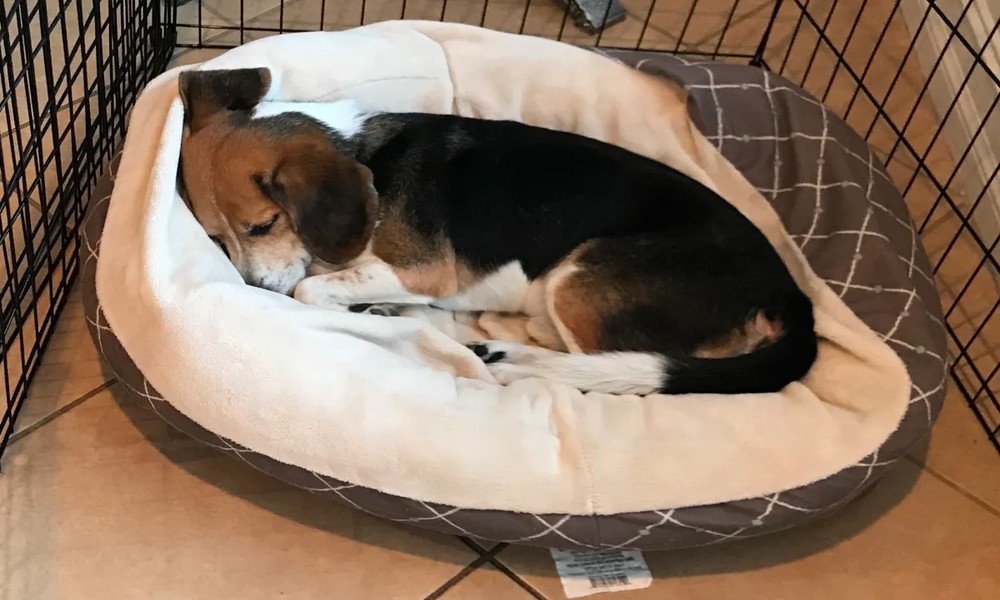
The amount of sleep that dogs get is more than that of humans although it differs greatly with age. Healthy adults do not sleep as much and remain more active, whereas puppies and senior dogs require the most sleep. This guide gives the normal sleeping schedule for dogs (犬 睡眠 時間) in each stage of life. The awareness of age related sleep will allow the owners to detect any possible health problems at an early age.
How long should dogs sleep with age
Puppies need the most sleep
Puppies that are growing use excessive energy in their short waking times, thus taking frequent naps to replenish. The sleeping pattern of a two month old puppy is about eighteen to twenty hours a day and only wakes up to play, go to school and have a meal. The sleep patterns of growing dogs are:
- Newborn to two weeks: The puppies take approximately twenty-two hours each day to sleep, and only wake up to nurse and go to sleep again.
- Three to seven weeks: The puppy’s sleep gradually declines to eighteen to twenty hours during this time as the puppies begin to explore the world.
- Eight to twelve weeks: The average puppy sleeps fifteen to eighteen hours and the active time of the puppy is only thirty-sixty minutes.
- Three to six months: The need for sleep decreases to fourteen to sixteen hours as the level of energy and the duration of wakefulness rises.
- Six to twelve months: At this age, adolescent dogs require twelve to fourteen hours of sleep although high-energy breeds may require more sleep.
Adult dogs maintain consistent patterns
The normal sleeping hours of healthy adult dogs are twelve to fourteen hours in twenty four hours. As opposed to humans, dogs do not sleep during the night in a single stretch; they have several naps both during the day and night. The sleep patterns of adult dogs are as follows:
- Average sleep per day: The average adult dog spends between twelve to fourteen hours of sleep on a daily basis and larger dogs might need more sleep.
- Night sleep: Dogs do not sleep during the night but sleep in shifts and spend an average of eight to ten hours in the night.
- Daytime napping: Adults have two to four naps throughout the day, each of them is thirty minutes to two hours.
- Activity correlation: Active working dogs might sleep less and house pets which are not active might sleep more.
Senior dogs return to puppy-like patterns
The elderly dogs tend to sleep more because the body becomes slower and there is lack of energy. Most elderly dogs take sixteen to eighteen hours to sleep a day just like during their puppyhood. The following are the changes in sleep in aging dogs:
- Increased total sleep: Dogs more than seven years old have a sleep period ranging between sixteen to eighteen hours in a day.
- Less sound sleep: Arthritis pain or cognitive impairment leads to more frequent waking up and poor sleep.
- Daytime napping: The older dogs, those that are seniors have more naps and less time awake than adult dogs.
- Night restlessness: Elderly dogs will pace or whine or even seem to be lost during the night which will cause sleep disorder.
What disrupts normal dog sleep?
The sleeping habits of dogs are influenced by the environment, health issues, and even routine activities. Sleep alterations are usually indications of a problem that requires to be addressed. The following are some of the reasons that may cause sleep disruption in dogs:
- Noise disturbances: Thunder, fireworks, traffic noise or domestic noise can be an obstacle to deep and restful sleep.
- Temperature extremes: Dogs cannot stand too high and too low temperatures since it breaks the normal sleep patterns.
- Inconsistent schedule: irregular time of walking, sleeping and bedtime will confuse a dog’s internal clock and will lead to lack of sleep.
- Pain or discomfort: In arthritis, dental disease or injury, dogs frequently wake up during the night.
Summary
Learning about the age related sleeping habits can assist owners to identify normal and problematic sleep. Puppies and the seniors should get the most sleep and healthy adults should engage in regular exercise daily so that they get enough sleep. Any abrupt change in sleeping patterns is a reason to discuss the issue with the veterinarian.
